Sports card value lookup and price guide
A sports card value lookup is only useful when it matches the exact card in your hand. The player name is not enough. Year, brand, set, card number, parallel, autograph status, condition, and grade can all change the value.
This sports card price guide shows how to look up sports card values using real market data, avoid bad price comparisons, and decide whether to sell raw, grade the card, or keep it in your collection.

What Sports Card Value Lookup Really Means
The usual first move is to search a player name plus the word value. That can give a rough idea, but it often misses the details that matter most. A base card, silver parallel, numbered parallel, autograph, patch autograph, and graded copy can all belong to the same player and sell for completely different prices.
A good sports card value lookup answers four questions:
- What exact card do I have?
- What condition or grade is it in?
- What did similar copies sell for recently?
- Is the market moving up, down, or flat?
How To Look Up A Sports Card Value
Step 1: Identify the exact card
Start with the basics: player, sport, year, brand, set, and card number. Then check whether the card is a base card, insert, refractor, silver, color parallel, serial-numbered card, autograph, relic, patch, or short print.
Step 2: Match the version before checking price
Do not compare a raw base card to a PSA 10 parallel. The image may look similar, but the market is different. Match the exact version first, then compare condition and grade.
Step 3: Use recent sold prices
Completed sales are more useful than active listings. Active listings show what sellers hope to get. Sold listings show what buyers actually paid. For active players, prioritize sales from the last 30-90 days because performance, injuries, trades, and playoffs can move prices quickly.
Step 4: Adjust for condition
Raw cards with corner wear, surface scratches, print lines, dents, off-centering, or edge damage should be valued below clean near-mint examples. If the card is graded, compare the same grading company and grade whenever possible.
Step 5: Check more than one sale
One sale can be unusual. Look for a range of recent sales, then ignore obvious outliers. A realistic value is usually near the middle of recent comparable sales, not the highest number you can find.
How To Use A Sports Card Price Guide
Use a price guide to find the right issue and version, then check its date and the condition it describes. If you are researching one sport, start with the baseball, basketball, or football guide linked below. Keep the exact card details beside you while comparing results.
A useful sports card price guide should not give one fixed number. It should show a value range based on recent sales, then separate raw cards from graded cards. For example, a raw near-mint card, PSA 9 card, and PSA 10 card may all have different buyer demand.
Use a price guide as a starting point
Start with the guide to understand the market range. Then confirm the exact card and compare sold listings. This is the safest way to check sports card value without overpricing a common card or underpricing a rare parallel.
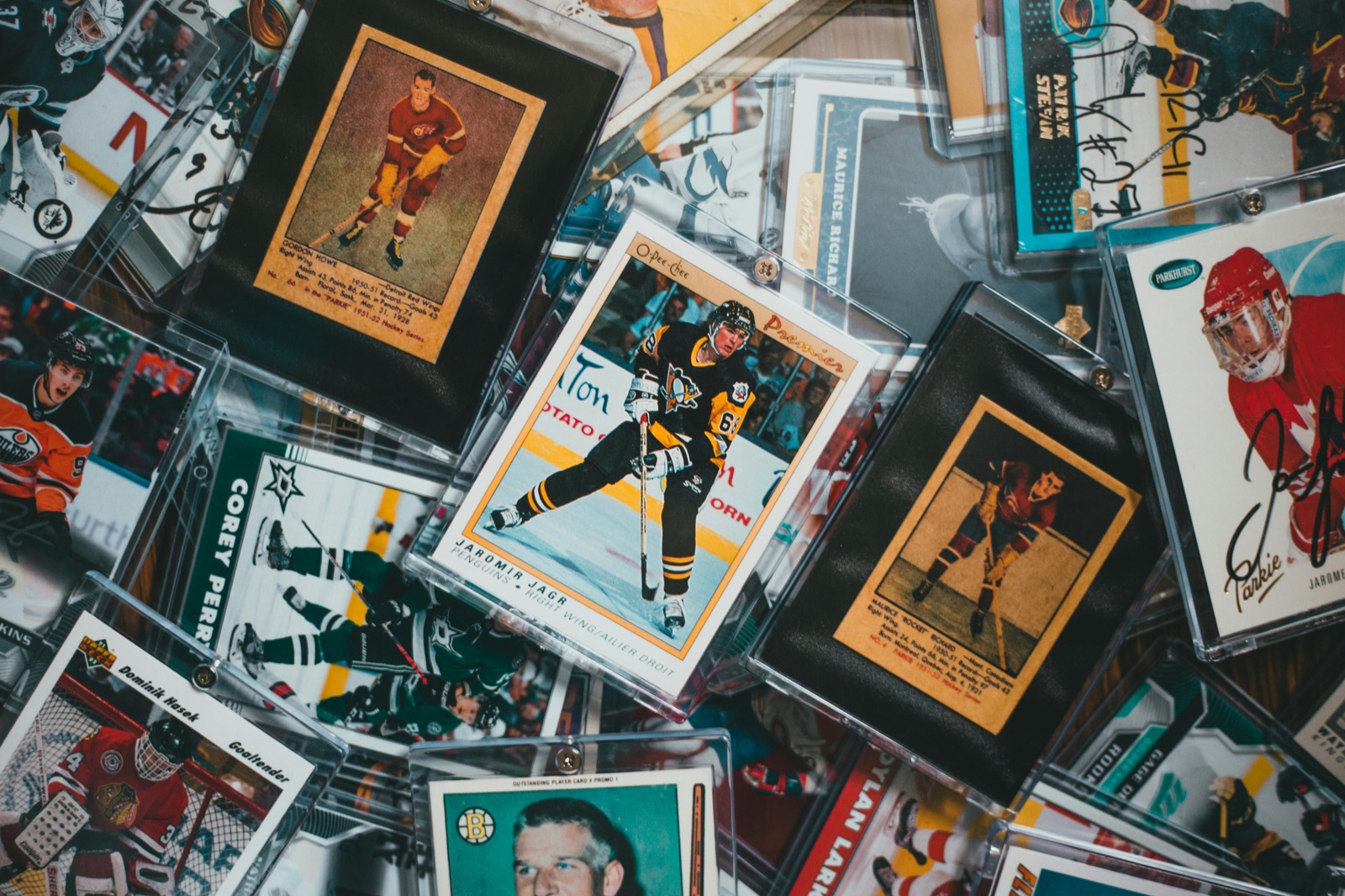
What Sports Card Price Data Should You Trust?
The best sports card value lookup uses real transactions. Recent sold prices are stronger than asking prices, old printed guides, or social media guesses.
Useful sources include completed marketplace sales, auction results, and scanner tools that summarize comparable sales. You can also use eBay Advanced Search to filter for sold items, and PSA population reports to understand how common a graded card is.
Price data to be careful with
- Active listings with no sale history
- Old sales from a different market cycle
- Listings with the wrong parallel or card number
- Raw cards compared against PSA 10 prices
- Damaged cards compared against near-mint cards
Raw Vs Graded Sports Card Values
Raw and graded cards should be treated as separate markets. A PSA 10, PSA 9, BGS 9.5, SGC 10, and raw copy can each have different demand. The grade adds trust around condition and authenticity, but grading is not always worth the cost.
Before grading a card, compare the raw value, PSA 9 value, PSA 10 value, grading fee, shipping cost, and likely turnaround time. If the PSA 9 price is close to the raw price, grading may not add enough upside. If the PSA 10 price is much higher and the card looks clean, grading may be worth considering.
Using A Scanner App For Sports Card Value Lookup
A scanner app can speed up the most painful part of sports card value lookup: identifying the exact card. ScoutCard scans sports cards from a photo, helps identify the player, year, set, and variant, then helps you compare real market prices faster.
This is especially useful when sorting inherited collections, buying at card shows, checking garage sale finds, or reviewing a large box of mixed baseball, basketball, football, hockey, and soccer cards.
Fast Sports Card Value Lookup Workflow
- Scan or photograph the card.
- Confirm player, year, set, card number, and version.
- Check recent sold prices for the exact card.
- Compare raw, PSA 9, and PSA 10 values if grading matters.
- Decide whether to sell, grade, hold, or add it to your collection.
This workflow covers the main searches collectors use: sports card value, sports card prices, sports card pricing, and sports card worth. The wording changes, but the goal is the same: find a realistic market value from comparable sales.
Download ScoutCard free on the App Store to identify cards and check values from your phone.
Related reading: Baseball Card Value Lookup | Basketball Card Value Lookup | Football Card Price Guide | Sports Card Scanner App
FAQ: Sports Card Value Lookup
What is the best way to look up sports card values?
The best way is to identify the exact card, then compare recent sold prices for the same version and similar condition or grade.
Can I use active listings to value a sports card?
Active listings can show seller expectations, but they are not the same as value. Sold listings are more reliable because they show actual buyer behavior.
Why do two similar cards have different values?
Small details can change value: rookie status, parallel, serial number, autograph, patch, condition, grade, and market timing all matter.
Is a sports card scanner accurate enough?
A scanner can speed up identification and price research, but you should still confirm the exact version and compare recent sales before making a selling or grading decision.