
If you’ve got a box of old baseball cards gathering dust, you might be sitting on more money than you think. Baseball card values have surged over the last decade, with some rookie cards selling for millions while others are worth just cents. Knowing how to check baseball card values — and what factors drive them — is the first step to understanding your collection.
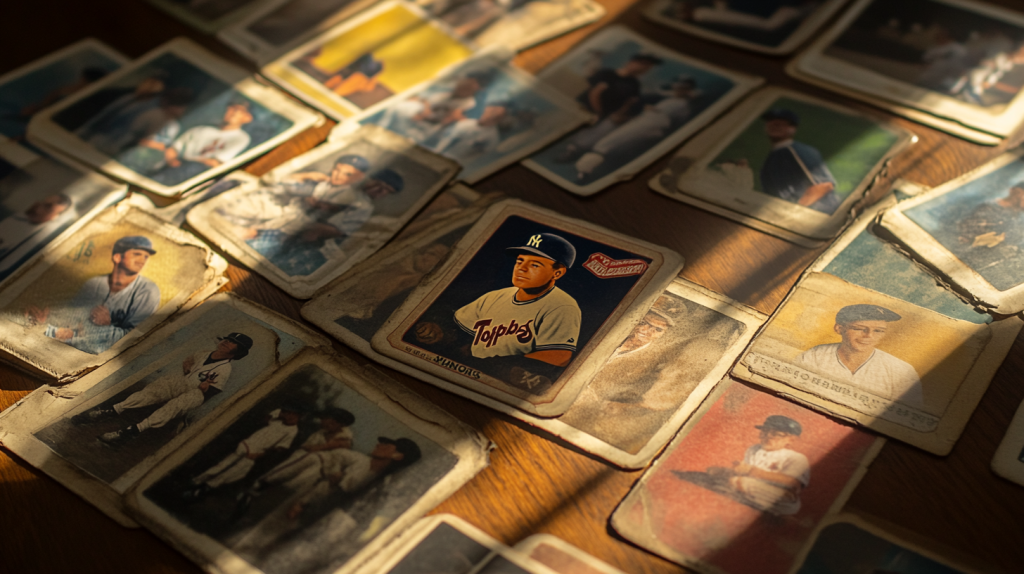
This guide covers everything you need to know about baseball card values in 2026, from how to identify your cards to where to find real market prices.
What Determines Baseball Card Values?
Baseball card values are never fixed. They fluctuate constantly based on several key factors:
1. Player Performance and Popularity
The single biggest driver of baseball card values is the player on the card. Active players see their card values spike with strong seasons, championships, or awards. Hall of Fame inductees typically see a permanent boost. Cards featuring players like Mike Trout, Shohei Ohtani, or Juan Soto command premium prices simply because of who they are.
2. Card Condition
Condition is everything in the hobby. A card in Gem Mint condition (PSA 10) can be worth 10x or even 100x the same card in Good condition. Collectors grade condition on factors including:
- Corners — sharp or rounded?
- Edges — clean or chipped?
- Surface — scratches, print defects, stains?
- Centering — is the image centered or off to one side?
3. Year and Set
Rookie cards are almost always the most valuable cards for any player. The first officially licensed card of a player in their debut MLB season is what collectors prize most. Beyond rookies, cards from the early Topps era (1950s–1960s) command huge premiums due to their age and scarcity.
4. Brand and Parallel Variants
Modern baseball cards come in countless variants. A base Topps Chrome card might sell for $5, while the Gold Refractor parallel of the same card sells for $500. Understanding the parallel system — numbered cards, superfractors, autographs — is crucial to accurately valuing your collection.
5. Professional Grading
Cards graded by PSA (Professional Sports Authenticator), BGS (Beckett Grading Services), or SGC command significant premiums over raw (ungraded) cards. A PSA 10 can be worth 3x to 10x a PSA 8 of the same card.
Most Valuable Baseball Cards in 2026
Here are some of the most valuable baseball cards currently on the market:
| Card | Recent Sale Price |
|---|---|
| 1952 Topps Mickey Mantle #311 (PSA 9) | $12.6 million |
| 1909 T206 Honus Wagner | $7.25 million |
| 1916 Sporting News Babe Ruth (PSA 2) | $4.2 million |
| 2009 Bowman Chrome Mike Trout Auto (BGS 9.5) | $3.9 million |
| 1955 Topps Sandy Koufax RC (PSA 8) | $504,000 |
These are outliers — most baseball cards are worth far less. But they show what’s possible when rarity, condition, and player prestige align.
How to Check Baseball Card Values
Step 1: Identify Your Card
Before you can value a card, you need to know exactly what it is. This means identifying:
- Player name
- Year of issue
- Brand (Topps, Panini, Bowman, etc.)
- Set name
- Card number
- Any special designation (rookie card, autograph, numbered parallel)
Step 2: Check Recent Sales Data
The most accurate baseball card values come from recent completed sales, not asking prices. Check:
- eBay sold listings — filter by “sold” to see what cards actually sold for
- COMC — large marketplace with historical pricing
- Beckett — subscription-based price guide
Step 3: Account for Condition
Be honest about your card’s condition. Most cards pulled from packs decades ago are not in mint condition. Compare your card to grading guides and estimate conservatively.
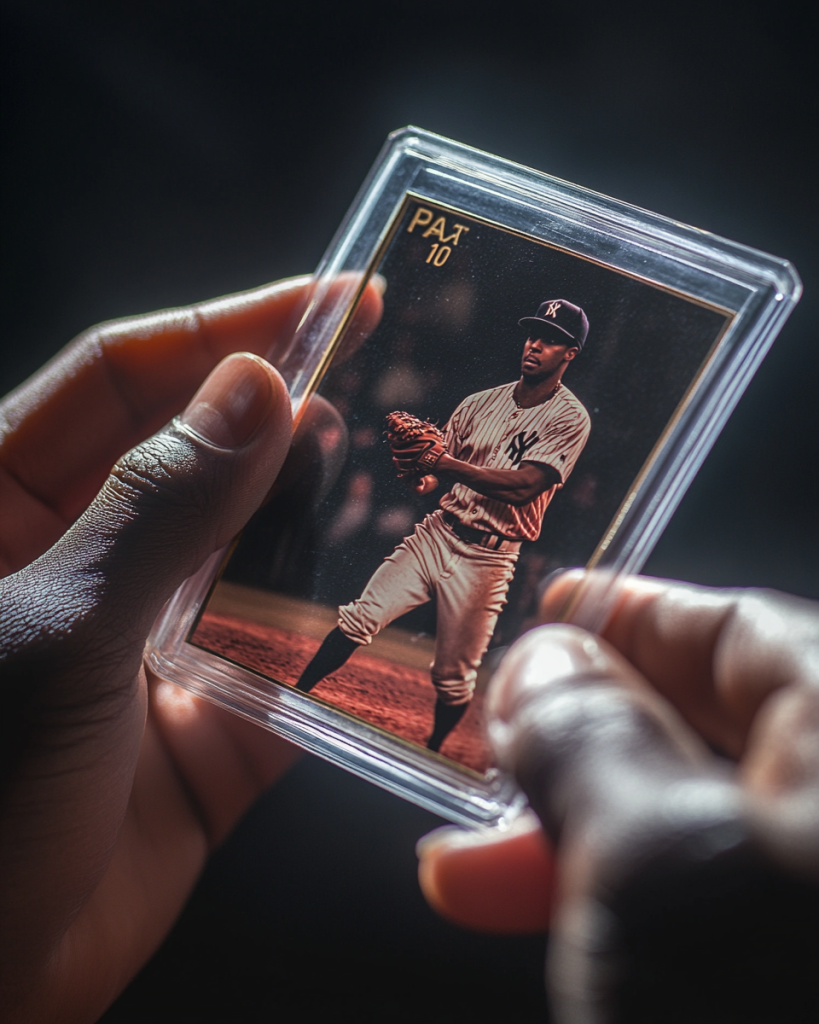
Step 4: Use a Card Scanner App
The fastest way to check baseball card values is with a scanner app like ScoutCard. Point your camera at any card and get instant identification plus real market prices from recent sales — all in seconds.
Baseball Card Values by Era
Vintage Cards (Pre-1980)
These are generally the most valuable cards, particularly in high grades. The T206 set (1909–1911), 1952 Topps, and 1955 Topps are among the most sought-after sets. Condition is everything — a 1952 Topps Mantle in PSA 5 might sell for $50,000, while a PSA 9 sold for millions.
Junk Wax Era (1986–1994)
This era saw massive print runs, meaning most cards from this period are worth very little despite being 30+ years old. Exceptions include rookie cards of stars like Ken Griffey Jr. and Frank Thomas in top grades.
Modern Cards (2000–Present)
Modern baseball cards range from nearly worthless base cards to extremely valuable numbered parallels and autographs. The key is knowing which cards matter — low-numbered parallels, on-card autographs, and rookie cards of current stars drive the most value.
Grading Your Baseball Cards
If you think your cards might be valuable, professional grading is worth considering. Here’s how the math works:
- Raw 2009 Bowman Chrome Mike Trout auto: ~$800
- PSA 10 version: $3,900+
- BGS 9.5 version: $2,500+
Grading costs range from $20 to $300+ per card depending on service level and turnaround time. It’s only worth grading cards that have significant raw value to begin with.
Common Questions About Baseball Card Values
Are old baseball cards worth anything? Some are, many aren’t. Cards from the 1980s and early 1990s were overproduced and are generally worth little. Pre-1970 cards in good condition, and rookie cards of Hall of Famers, tend to hold real value.
How do I find the value of a specific baseball card? Check recent eBay sold listings for the exact card (including condition), or use a scanner app like ScoutCard to get instant pricing from real sales data.
Does condition really matter that much? Yes — dramatically. A 1952 Topps Mantle in PSA 2 sold for around $500,000. The same card in PSA 9 sold for $12.6 million. Condition can multiply value by 25x or more.
Are graded cards always worth more? Generally yes, especially for valuable cards. The authenticity guarantee and condition verification that grading provides adds significant value to high-end cards.

Check Your Baseball Card Values Instantly
Sorting through a collection card by card is time-consuming. ScoutCard lets you scan any baseball card with your phone camera and instantly see real market prices from recent sales — including raw values and graded comparisons.
Whether you’re valuing an inherited collection or checking prices before you buy or sell, ScoutCard gives you accurate data in seconds.