
A baseball card scanner app has changed the way collectors value their cards. Instead of hours of manual research — cross-referencing price guides, searching eBay sold listings, trying to identify the exact parallel or variant — you can now point your phone at any card and get an accurate value in seconds.
Here’s everything you need to know about baseball card scanner apps, how they work, and what to look for when choosing one.
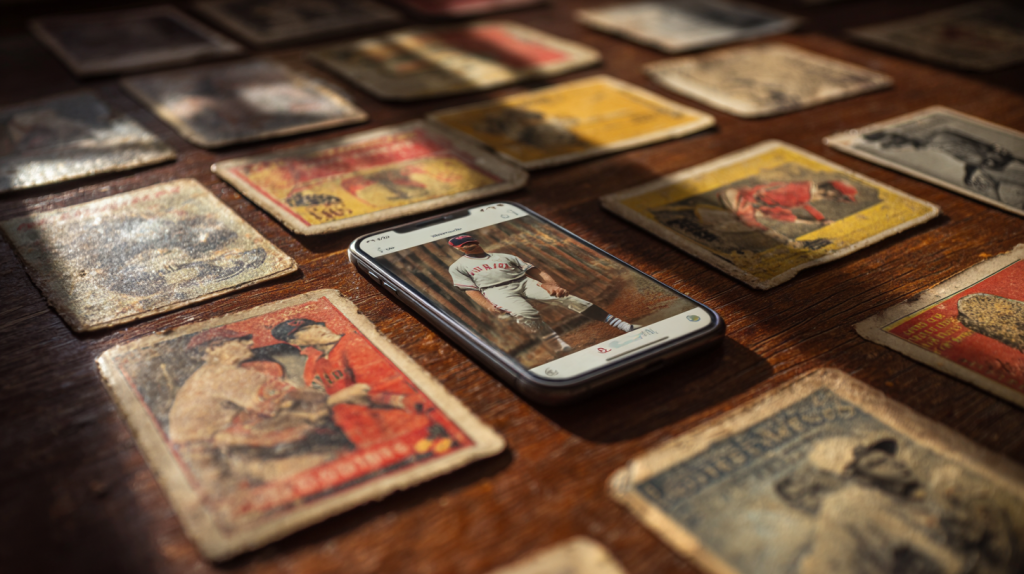
Why You Need a Baseball Card Scanner
The baseball card market moves fast. Prices change daily based on player performance, recent sales, and market trends. A price guide published six months ago is already out of date. Manual eBay searching is accurate but time-consuming — and you need to correctly identify the card first, which isn’t always easy.
A baseball card scanner solves all of this:
- Instant identification — reads player, year, brand, set, card number, and variant from a photo
- Real-time pricing — pulls from actual recent sales, not published guides
- Grading comparisons — shows raw value plus PSA 9 and PSA 10 equivalents
- No expertise required — works for beginners and experienced collectors alike
Whether you’re going through an inherited collection, shopping at a card show, or deciding whether to submit cards for grading, a scanner gives you the information you need instantly.
What a Baseball Card Scanner Can Identify
Good baseball card scanner apps can identify virtually any card in your collection:
By Era
- Pre-war cards (T206, Cracker Jack, Goudey)
- Vintage Topps (1952–1979)
- Junk wax era (1986–1994)
- Modern cards (2000–present)
- Super premium (National Treasures, Topps Dynasty)
By Brand
- Topps, Topps Chrome, Topps Heritage, Topps Archive
- Bowman, Bowman Chrome, Bowman Draft
- Panini, Panini Prizm, Panini Mosaic
- Upper Deck, Fleer, Donruss, Score, Pacific
By Variant
This is where a scanner really earns its keep. Identifying parallels manually is notoriously difficult — colors look similar, foil patterns are subtle, and serial numbers are easy to miss. A baseball card scanner reads these details precisely:
- Base cards vs. parallels
- Foil refractors and color variants
- Numbered cards (/999, /500, /100, /50, /10, /5, 1/1)
- Autograph vs. non-autograph versions
- Rookie cards vs. base cards
How to Get the Best Scans
For the most accurate identification and pricing, follow these tips:
Good lighting is essential. Natural light or a bright indoor lamp works best. Avoid flash — it creates glare that can confuse the scanner.
Scan both front and back. The back of a card often contains the card number, copyright year, and other identifying information. Scanning both sides significantly improves accuracy.
Lay the card flat. Curved or bent cards can be harder to identify. Lay the card on a flat surface if possible.
Keep the camera steady. Blurry photos lead to misidentification. Take a clear, focused shot.
Remove from sleeve for difficult cards. Most scanners work through card sleeves, but removing the card improves accuracy for older or damaged cards.
Baseball Card Scanner vs. Beckett Price Guide
Beckett has been the standard baseball card price guide for decades. But scanner apps have significant advantages in 2026:
| Feature | Beckett | Baseball Card Scanner |
|---|---|---|
| Update frequency | Monthly/quarterly | Real-time |
| Data source | Editors | Actual completed sales |
| Identification | Manual | Automatic |
| Speed | Minutes | Seconds |
| Cost | Subscription | Free to start |
| Graded comparisons | Limited | Comprehensive |
For current market values, real-time scanner apps are more accurate than any published guide. Beckett still has value for its authentication services and as a reference tool, but for pricing, actual sales data wins.
Most Valuable Baseball Cards to Scan First
If you have a collection to go through, prioritize scanning these types of cards first — they’re most likely to surprise you with value:
Pre-1970 cards in any condition. Even heavily worn vintage cards can be worth significant money.
Rookie cards of current stars. Mike Trout, Bryce Harper, Fernando Tatis Jr., Ronald Acuña Jr. rookies from their debut seasons.
Low serial number parallels. Any card numbered /25 or lower deserves a close look.
On-card autographs. Sticker autos are common; on-card signatures are rarer and more valuable.
1986–1993 Ken Griffey Jr. cards in high grades. His Donruss and Upper Deck rookies in PSA 10 can be worth $500+.
Any cards in seemingly perfect condition. Cards you pull from sealed packs or find in pristine storage may be PSA 10 candidates worth far more graded.
Scanning Your Baseball Cards with ScoutCard
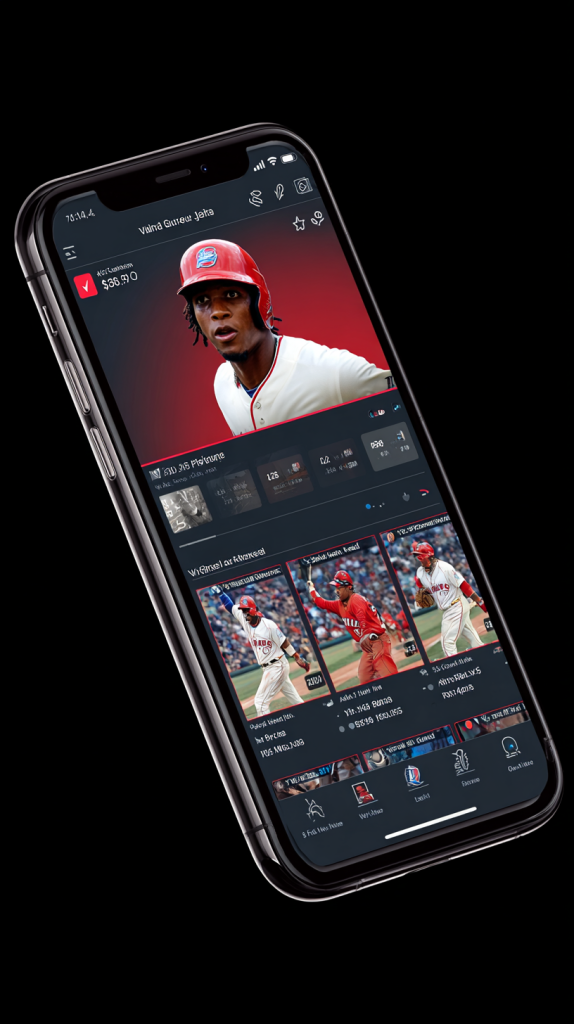
ScoutCard is purpose-built for collectors who want fast, accurate baseball card identification and pricing. Here’s the workflow:
- Open the app → tap the scan button
- Photograph the front of your baseball card
- Photograph the back for maximum accuracy
- View results — player name, year, brand, set, card number, variant, and condition estimate
- Check prices — raw card value range, PSA 9 comparison, PSA 10 comparison, grading uplift
- Save or list — add to your collection or create a sale listing with auto-generated title and suggested price
ScoutCard covers all major baseball card brands and sets, from T206 tobacco cards to the latest Topps Chrome releases.
How Much Is My Baseball Card Worth?
Here are some quick benchmarks for common baseball cards people discover in collections:
1952 Topps Mickey Mantle #311 — PSA 5: ~$50,000 | PSA 9: $12.6 million
1986 Topps Traded Barry Bonds RC — Raw NM: $15–30 | PSA 10: $300–500
1989 Upper Deck Ken Griffey Jr. RC — Raw NM: $20–40 | PSA 10: $500–800
2011 Topps Update Mike Trout RC — Raw NM: $300–500 | PSA 10: $4,000+
2018 Topps Update Shohei Ohtani RC — Raw NM: $50–100 | PSA 10: $500+
2022 Bowman Chrome Julio Rodriguez Auto /99 — Raw: $200–400
The fastest way to check your specific cards is to scan them — condition and exact variant can change values dramatically.
Start Scanning Your Baseball Cards
A baseball card scanner turns hours of research into seconds of scanning. Whether you’re valuing an inherited collection, shopping smarter at card shows, or deciding what to send for grading, having instant access to real market prices is a game-changer.
Download ScoutCard free on the App Store and scan your first card today →
Related reading: [Baseball Card Values Guide] | [Sports Card Price Guide] | [Sports Card Scanner Guide]